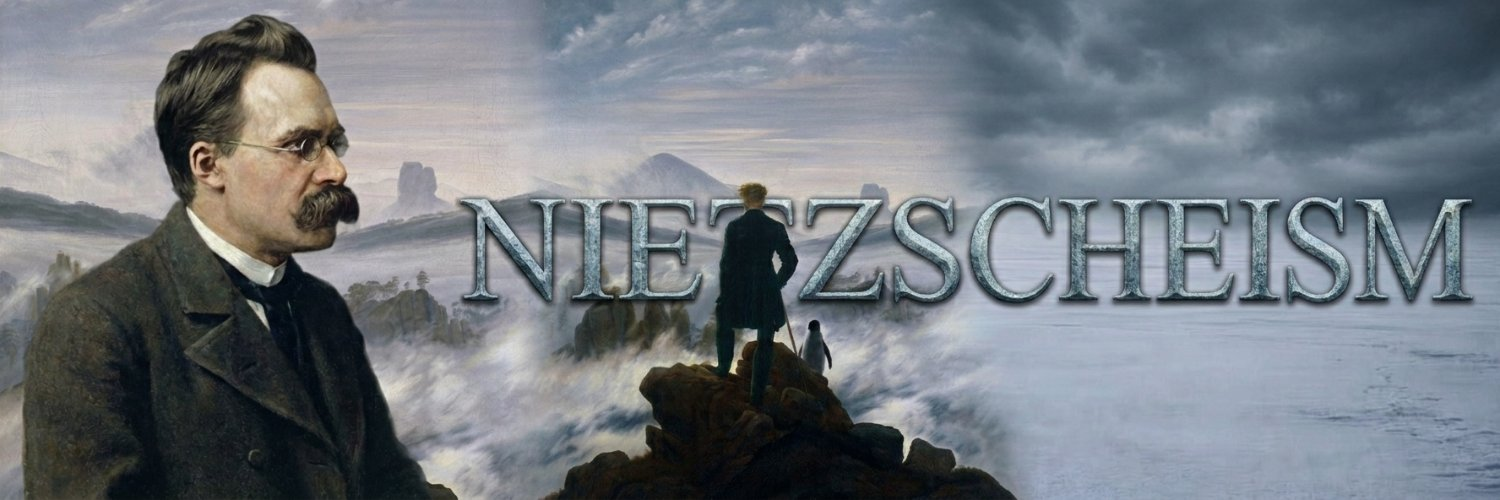
Friedrich Nietzsche and the Wanderer above the Sea of Fog

An Inquiry into the Will

Nietzscheism

The doctrine of the higher man — to live dangerously, to overcome oneself, to dance upon the corpse of every comforting illusion.

Gott ist tot · 1882

"Wherever there is a herd, it is the instinct of weakness that has willed the herd, and the wisdom of the priest that has ruled it."

— Friedrich Nietzsche

I. Manifesto

The Death of
God

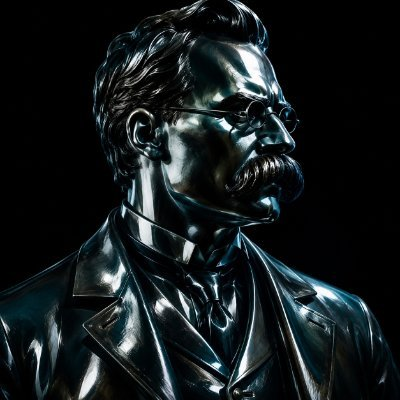
Bust of Nietzsche in metal

God is dead. God remains dead. And we have killed him. How shall we comfort ourselves, the murderers of all murderers? What was holiest and mightiest of all that the world has yet owned has bled to death under our knives.

Nietzscheism does not mourn this death — it inherits it. With the heavens emptied, the burden of meaning falls upon the individual. The slate is not blank; it is shattered. And from the shards, the higher man fashions his own tablet of values.

To live — truly to live — is to legislate. To stop asking permission of priest, of crowd, of the comfortable lie. The herd huddles for warmth; the noble soul walks alone into the cold and calls it freedom.

"He who has a why to live can bear almost any how."
II. Doctrines

The Four Pillars of the Hammer

01Wille zur Macht

Will to Power

The fundamental drive of all life is not survival, nor pleasure, but the discharge and expansion of force. To grow, to overcome, to impose form upon the formless — this is the engine beneath every action, noble or base.

02Ewige Wiederkunft

Eternal Recurrence

What if a demon whispered: this life, as you now live it, you will live again — innumerable times? The thought is a hammer. Live so that you would will every moment, every wound, every joy, eternally returned.

03Der Übermensch

The Übermensch

Man is something to be overcome. The Übermensch is not a race nor a tyrant — he is the one who creates his own values from the silence after God, who dances above the abyss without needing a rope to cling to.

04Amor Fati

Amor Fati

The love of fate. Not merely to endure what is necessary, but to love it — to find in every catastrophe a yes, in every wound a teacher. My formula for greatness: that one wants nothing to be other than it is.

III. Aphorisms

Fragments from the Edge

Read slowly. Each line is a coiled spring.

"He who fights with monsters should look to it that he himself does not become a monster. And when you gaze long into an abyss, the abyss also gazes into you."
Beyond Good and Evil, §146
"You must have chaos within you to give birth to a dancing star."
Thus Spoke Zarathustra
"Without music, life would be a mistake."
Twilight of the Idols
"There are no facts, only interpretations."
The Will to Power
"That which does not kill us makes us stronger."
Twilight of the Idols
"The individual has always had to struggle to keep from being overwhelmed by the tribe."
Human, All Too Human
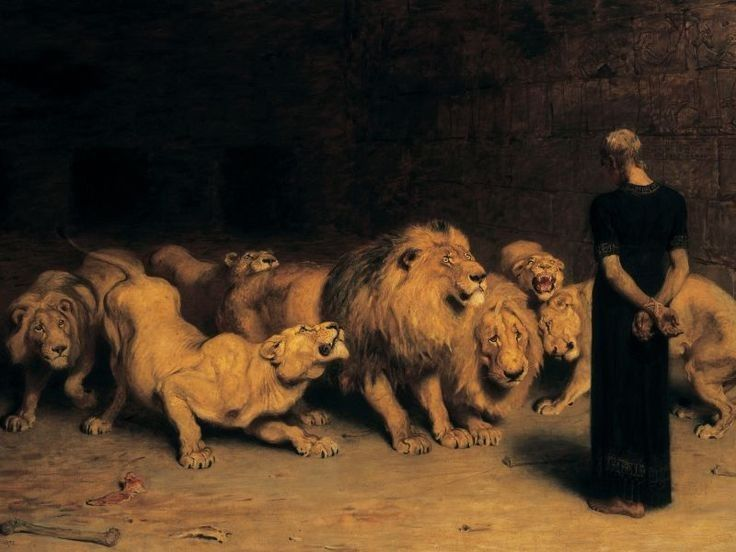
Daniel in the Lions' Den by Briton Rivière

IV. The Herd

Among
Lions,
Alone.

The herd offers warmth, certainty, the soft narcotic of agreement. It demands only one thing in return: your becoming. Refuse, and you are cast out among lions. There, in the den, you may discover that the lions were never your enemy — they were your mirror.

The slave morality calls weakness "humility," cowardice "patience," impotence "goodness." It inverts the world so that the trampled may feel chosen.

The master morality calls strength what it is, and beauty what it is, and creates values from a surplus of life — not a deficit.

To pass from one to the other is the work of a lifetime, and the loneliness of a god.

V. Becoming

Werde,
der du bist.

Become who you are. Not who they made you. Not who you fear to be. Who, in the silence beneath all silence, you have always been.